
Este texto está escrito en inglés porque aborda un debate que hoy se está dando sobre todo en Estados Unidos. Si les parece relevante, compártanlo.
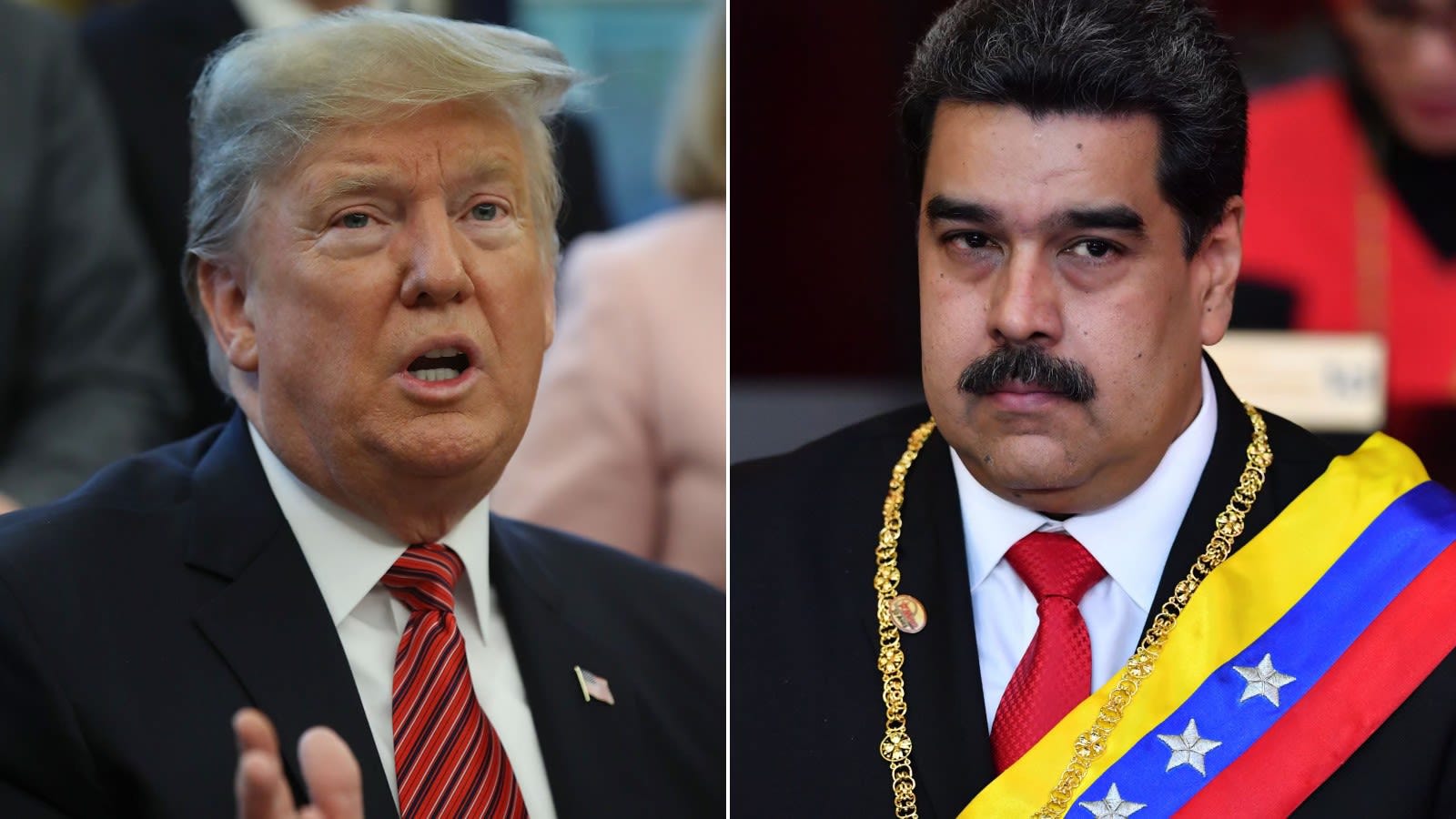
After the U.S. military raid that seized Venezuela’s dictator Nicolás Maduro, an arrangement between the Trump administration and the decapitated regime in Caracas appears to be taking shape.
The country’s new leader, former vice-president Delcy Rodríguez, is willing to yield to Washington’s demands in exchange for avoiding her predecessor’s fate and possibly remaining in power. In return, the White House gains stability: a Maduro-less dictatorship aligned with American interests, including access to Venezuela’s vast oil reserves, without the chaos—and potential troop deployment—that genuine regime change could entail.
This scheme, if indeed it’s the one coming together, is unstable and likely to fail, extending the Chavista autocracy in a repackaged form. U.S. demands are in deep tension with the dictatorship’s priorities, especially those tied to its own survival. It is unrealistic to think that a clique of untrustworthy, indicted criminals, now temporarily led by a figure with no firm control over rival factions, can or will commit to a long-term pro-American agenda in a lawless state that remains very unattractive to investors, and will continue to be so unless Chavismo is driven from power.
More importantly, this “regime management” approach, with highly uncertain rewards, would squander a unique chance for a lasting foreign policy achievement: leading Venezuela into a full-scale democratic transition. At no point since the country’s descent into authoritarianism has the opportunity been greater to make this a reality.
Conflictive objectives
An overlooked fact in the aftermath of Maduro’s extraction is that U.S. interests in Venezuela are not only incompatible with those of the dictatorship but also at odds with one another. When pressed by reporters, President Donald Trump has mentioned the need for presidential elections sometime in the future. It has become clear, however, that he does not see democratization as an urgent priority. What he emphasizes most is the exploitation of the nation’s oil reserves for America’s gain.
That focus coincides with a broader aim—outlined in the 2025 National Security Strategy—to reassert U.S. preeminence in the Western Hemisphere by denying or rolling back the growing regional military and economic influence of its adversaries. “If we didn’t do this, China or Russia would have done it,” Trump said recently, referring to his intention to control Venezuela’s oil. He has framed his bid to annex Greenland in the same terms.
To secure access to such resources, Trump views stability as paramount: there are no economic benefits for the U.S. if Venezuela descends into chaos.
At the same time, the administration is pursuing another set of objectives. Secretary of State Marco Rubio has said that Washington expects the regime to remove Cuban and Iranian operatives from the country and crack down on drug trafficking. The latter was allegedly reiterated by CIA director John Ratcliffe during a recent meeting in Caracas with Delcy Rodríguez.
The White House has also sent strong signals that Diosdado Cabello, the powerful interior minister who has long overseen Venezuela’s repression apparatus, could be next on its target list. According to some reports, the Trump administration would like to see him pushed into exile at some point, even as it now demands his cooperation.
The problem is that Cabello and Defense Minister Vladimir Padrino—both indicted in the U.S. on drug trafficking charges—head the police and the military: the men with guns who keep Delcy Rodríguez in power. For years, the regime has also relied on Cuban counterintelligence officers to surveil, monitor, and purge the troops under Padrino’s command. Some American demands would force Rodríguez to act against the very figures on whom her survival depends —figures who surely feel threatened by her conversations with Washington and by the now real possibility that she might betray them.
That dynamic is a recipe for instability, precisely what the administration claims it wants to avoid and what will continue to deter large-scale American investment, a prospect Trump believes he can unleash without a democratic transition.
Chavismo’s Strategy: Wait and See
The pact between the U.S. and Venezuela is also tenuous on the other side. Although the White House currently holds significant leverage, it operates under time constraints that the dictatorship does not. The truth is that Trump can’t sustain this favorable position indefinitely. Much can change: Republicans could lose the midterm elections; the president could face tighter domestic restrictions on his war powers; he could become entangled in a conflict elsewhere; or his health could suddenly deteriorate.
Venezuela’s government appears to be betting on this divergence of political clocks. Over the past weeks, the contours of its strategy have become clear: concede to Washington’s demands to the extent necessary, while minimizing the public humiliation of doing so and remaining alert to the internal fractures that a servile relationship with the U.S. could trigger. In short, Chavismo is doing what it has always done best: defusing a crisis that threatens its demise by entering negotiations in which it simulates goodwill until its survival is no longer at risk. Subservience to Trump should be understood as a temporary measure of self-preservation.
The worst part is that this game plan could work: the regime wins if it remains in power once Trump leaves the presidency or the moment he ceases to have sufficient leverage to extract major concessions. If that happens, it will have effectively outmaneuvered the person who prides himself on outmaneuvering everyone else.
What’s the alternative path? The Trump administration acts rationally in calculating that, at least for now, the best option is to work with Rodríguez. Decapitating Venezuela’s entire leadership at once would require on-ground military presence, given that all institutions—from the legislature to the armed forces to the Supreme Court—remain under Chavista control.
However, the longer Trump waits to push for real change, the more likely it is that the regime will outwit him.
A rare opening
In the past, negotiating a peaceful transition to democracy with Chavista leaders proved extraordinarily difficult. The reason was straightforward: many senior members of the government and the military face charges in the United States and in more than thirty other countries, while the International Criminal Court is investigating alleged crimes against humanity committed by them. For the inner circle, any offer of immunity entailed too much uncertainty, as legal threats emanate from a myriad of jurisdictions. That is why five attempts at “dialogue” failed. No one could offer the ruling clique a safer alternative than remaining in power.
Now, however, the alternative is the very real possibility of ending up like Maduro: whisked away in the middle of the night by an elite military unit. The equation by which the regime assesses its chances of survival fundamentally changed. Compounding that pressure, the White House has imposed a partial blockade in the Caribbean as part of its effort to gain control over Venezuela’s oil industry, the dictatorship’s main source of income. Negotiating a transition may now be the safer option.
That this basic equation has shifted is evident in the leadership’s willingness to concede on issues it would never have conceded before. Until recently, it was unimaginable for one of Latin America’s most anti-imperialist regimes to accept Washington’s oversight of its oil sales and control of its revenues. Yet it did. Equally unthinkable was Delcy Rodríguez’s cooperation with the U.S. military to recover an oil tanker that left the country without permission and was reportedly linked to an influential figure within the fragmented ruling coalition. Yet she did. Nor was it conceivable that, just days after American forces deposed her boss, Rodríguez would announce a reset in relations with the Trump administration and meet cordially with the CIA director.
Venezuelan officials have attempted to spin these moves in Chavista newspeak, but the desperation shows. Everything they have claimed for years their socialist revolution stood for has been abandoned in pursuit of a single objective: personal survival.
The White House now has multiple avenues to exert effective pressure on the dictatorship. One of the main obstacles to progress is Diosdado Cabello, who controls the security forces responsible for arresting, torturing, and disappearing political opponents. Although he has the means to sabotage any negotiation, he is in the same weak position as many regime heavyweights: trapped by the dual threat of U.S. action and betrayal from within his own ranks.
If he moves against Delcy Rodríguez, the Americans could target him; if he doesn’t, they could still detain him—perhaps with her collaboration. He faces a stark choice—exile or risk ending up like Maduro—that gives Washington an underappreciated negotiating advantage in forcing his exit.
With Cabello out of the picture, it becomes easier to envision a path forward. The Trump administration could offer amnesty and protections to Rodríguez and Defense Minister Vladimir Padrino —widely seen as more malleable than Cabello— and pressure them to incorporate the Venezuelan opposition’s leadership—including the Nobel Peace Prize laureate María Corina Machado, and Edmundo González Urrutia, the real winner of the 2024 presidential election that Maduro stole—into a transitional justice negotiation.
Such a process would involve complex bargaining over broader amnesties and the gradual re-institutionalization of the state, potentially opening a way toward a peaceful transfer of power. This is only a rough sketch of one possible course of action, which could be complemented—or replaced—by other ideas and approaches required to achieve what every transition ultimately demands: reconciling a wide array of competing interests, ambitions, fears, and normative claims into a single goal—restoring democracy.
There is a legitimate debate in the U.S. over the White House’s policies that led to this juncture. Settling scores about the past, however, should not come at the expense of Venezuela’s future. Dwelling on those disagreements will not alter the current situation and risks missing a narrow window to push events in the right direction. The democratic cause in Venezuela has strong supporters from both parties on Capitol Hill. As Democratic Senator Chris Murphy has noted, the priority now should be a bipartisan effort to give citizens a voice by holding an election as soon as possible.
This unexpected opening should be treated for what it is: a rare chance to recover freedom in Venezuela. Opportunities of this scale do not come often. It would be a mistake to allow this moment to slip away.
"El plan de Trump no va a funcionar ¿por qué? pues porque no". Me encanta como ahora todos quieren ser anti-imperialistas. Quiero ver a María Corina Machado, ganadora del premio Nóbel de la Paz, cantando en la próxima protesta "del río al mar Palestina libre", acompañada de Ricardo Haussmann.