

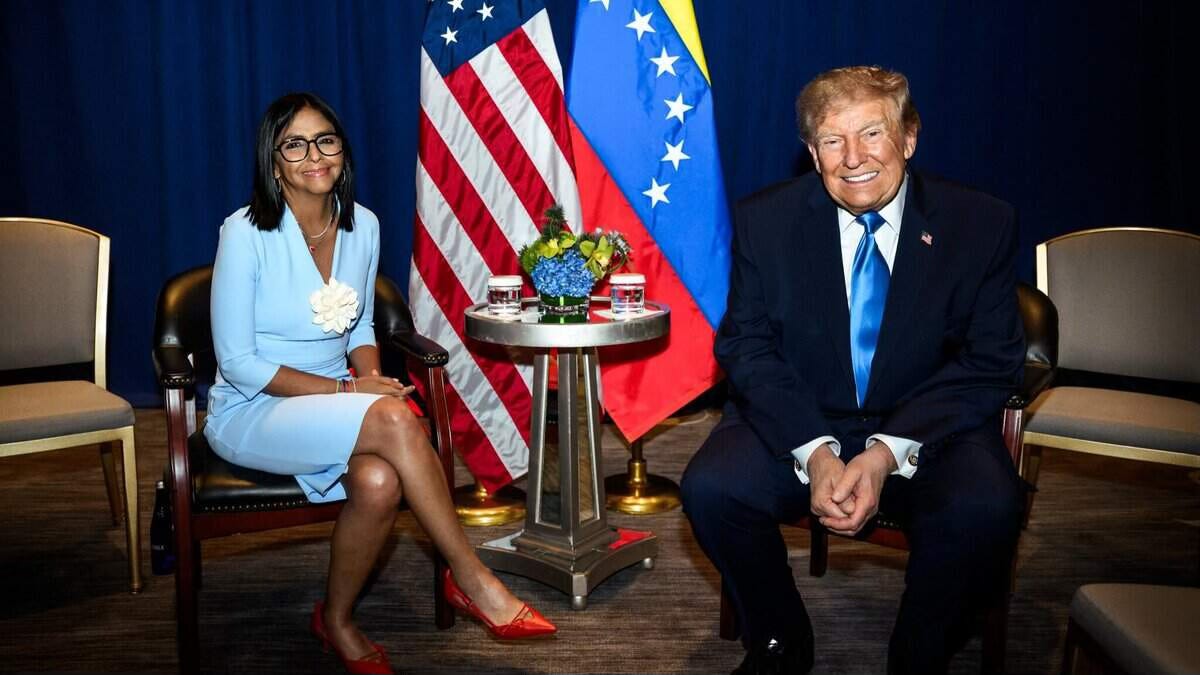
Most Venezuelans were hopeful after the January 3 U.S. military operation that seized dictator Nicolás Maduro, assuming a transition to democracy was inevitable. A March poll showed Donald Trump and Secretary of State Marco Rubio with higher approval ratings than any opposition leader in the country except Nobel Peace Prize laureate María Corina Machado.
That celebration was short-lived. Since then, it has become clear that Trump’s priority is not democracy, but Venezuela’s natural resources, mainly oil.
Rubio and other administration officials claim that a free and fair election is the final objective. If true, though, Trump’s own oil fixation may be undermining the chances of success. His extractivist agenda is creating a major obstacle to a transition: an incentive structure that helps the Chavista regime buy time and remain in power.
This problem is already clear. In the past months, Venezuela has become something close to an American colony. After the military operation, the U.S. took control of the country's oil revenues through accounts overseen by Treasury and the State Department. The arrangement has since expanded to include royalties and fixed production levies paid by oil companies.
In August, Washington went further, announcing a deal that gives the private firm NABEP access to roughly a fifth of Venezuela’s oil reserves while granting the Pentagon a stake in that firm. The shady businessman behind NABEP, now Washington’s partner, has faced corruption and money-laundering scrutiny in several countries, including the U.S.
The oil agreement makes no economic sense for Venezuela. Through NABEP, the U.S. government gains substantial control over 17 oil fields and the right to buy a share of their output at cost. In exchange, the Chavista regime gets only a vague promise that the deal will attract the capital needed to significantly increase production. The benefits for the U.S., ownership and cheap oil, are concrete and immediate; Venezuela’s may never materialize.
Why would Delcy Rodríguez sign such an agreement? She almost literally has a gun pointed at her head and depends on Washington’s approval to keep the state payroll running. More than a deal, this is an imposition that she accepts to avoid another military raid that could land her in the same New York jail as Nicolás Maduro. Between defying the superpower and survival through humiliation, Rodríguez chose the latter, betting that Washington cannot sustain its coercive leverage indefinitely.
So far, that strategy is working because Chavismo’s desire to preserve power aligns with Trump’s extractivist agenda. The regime can offer him something no post-transition democratic government could: extraordinary influence over Venezuela’s natural resources. Giving away the country’s oil would be far more difficult for an elected leader subject to legislative, judicial, and public oversight.
The State Department says its plan has three stages: economic stabilization, reconstruction, and democratic transition. Yet success in the last one would endanger this deal Trump considers a historic achievement. Why risk another government dismantling it, along with short-term benefits like subsidized oil? What an autocracy can provide, a democracy would likely take away.
That dynamic already extends beyond oil, as Washington is now brokering gold deals that would also be harder to sign with an elected government. If the goal is to keep expanding access to Venezuelan resources, maintaining Delcy in office while slowing the transition becomes increasingly convenient.
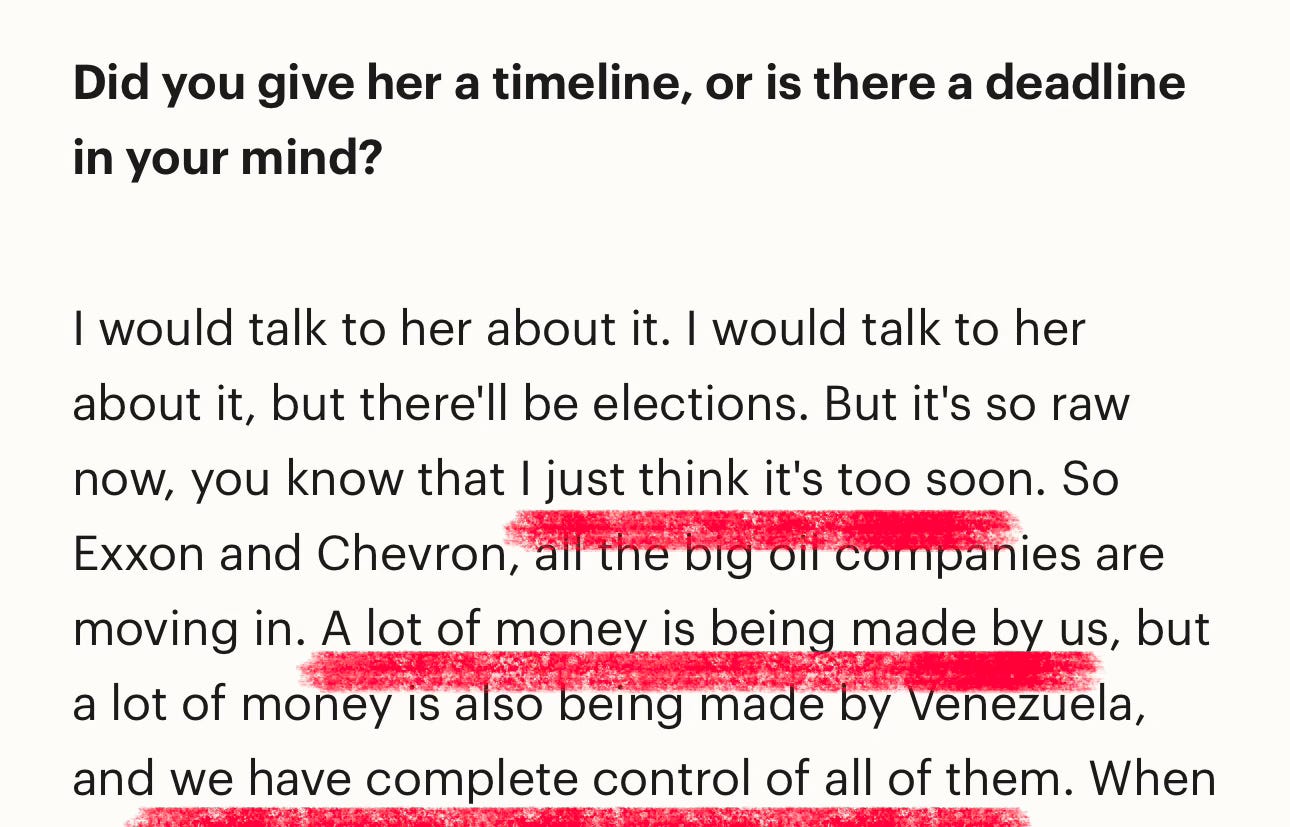
These incentives can also influence private companies. Since the deal is legally dubious and depends on both Trump and Delcy staying in power, oil majors will remain very cautious before committing the investments required to transform production. But more opportunistic firms with close ties to Trump are reportedly rushing into deals promising quicker returns. Although they may not oppose democracy, many could conclude that it threatens their contracts.
More troubling still is the lack of transparency. Nine months after Washington’s takeover of oil revenues, the administration hasn’t revealed how much it has collected or transferred back to Caracas. Nor has it released the oil agreement or the long-promised audits.
This combination of vast sums of money, opacity, and discretion is a recipe for corruption. And the risk that corrupt deals could be exposed, or their enabling conditions changed, expands the ecosystem of actors interested in preserving the status quo.
On Capitol Hill, support for a transition is strong in both parties, as it is among some officials inside the administration. But the longer it takes, the more interests will become invested in continuity and the greater the risk that Washington will lose its leverage over the regime.
The simplest way to realign incentives is to set a date for a presidential contest. An electoral timetable would put accountability on the horizon, constraining Trump’s extractive agenda and limiting the corruption that thrives with few guardrails and can later erupt into politically damaging scandals.
It would also give democratic forces something concrete to organize around, generating momentum that could become difficult to reverse.
Democrats and Republicans in Congress have already pushed for an election date. The pressure should intensify to prevent today’s arrangement from hardening into a new reality that could save the Venezuelan dictatorship.